Beads, Plumes and Painted Faces: Mexican Carnival Costume Up Close
Mexico City, Mexico · May 12, 2026 · 2 min read
A documentary set on Mexican carnival characters - towering beaded headdresses, carved masks with real bristle moustaches, ostrich plumes and a hat left on the ground at the end of it all.
Mexican carnival costume is one of the great sustained folk art traditions of the Americas and almost nobody photographs it properly. It gets shot as crowd colour - wide, from a distance, in the middle of a parade - which is exactly the wrong distance for objects made to be looked at from a metre away.
So this set is almost entirely close.
These are sculptures worn by people
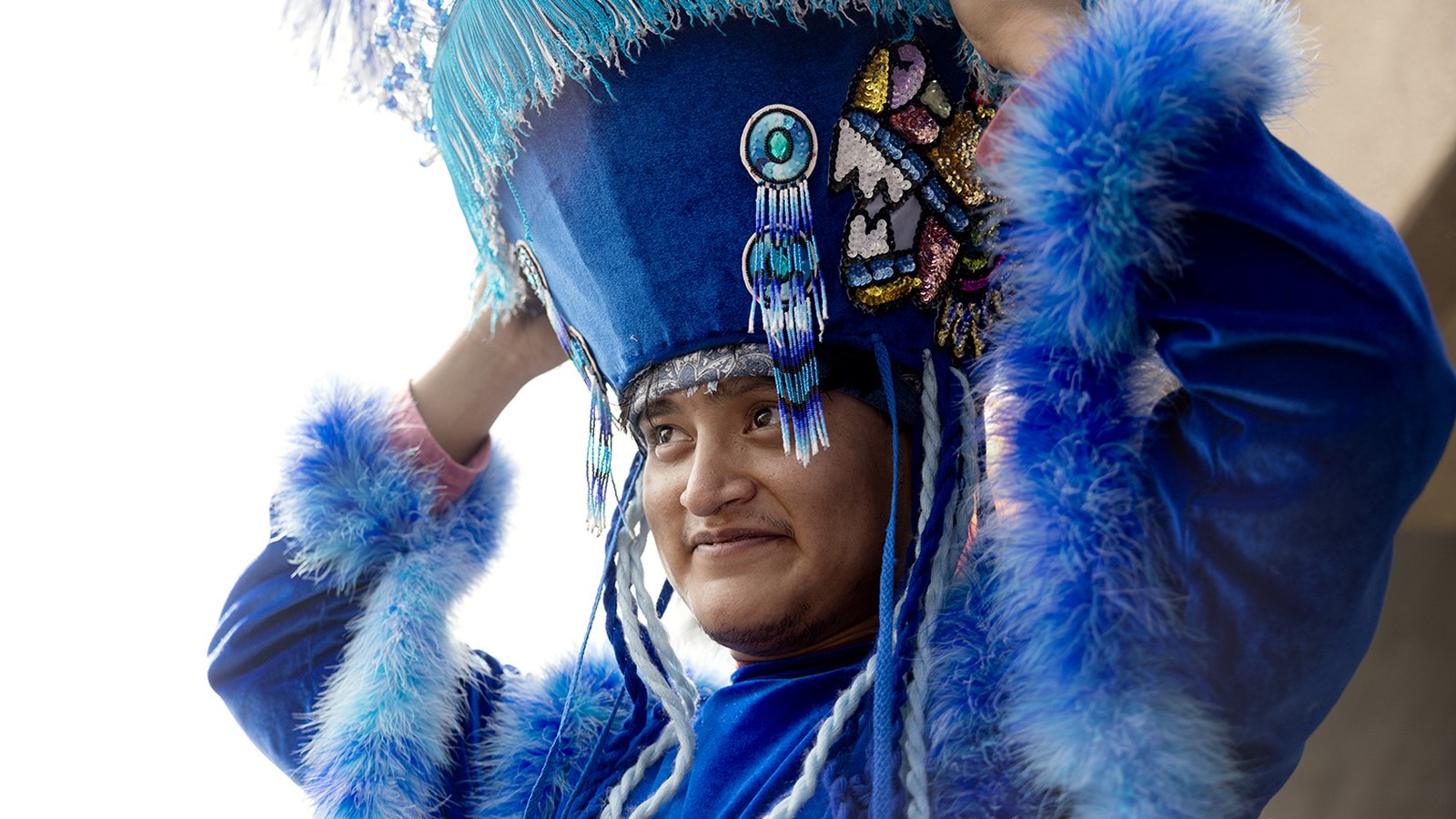
The headdresses in these frames are architectural: beaded panels a metre across, embroidered hearts, painted sun faces, ostrich plumes, fringe hanging to the chin. The masks are carved, painted with round pink cheeks, and fitted with real bristle beards and moustaches.
Photographing them the way I would photograph a product turns out to be the respectful choice rather than the cold one. Long lens, wide open, the face filling the frame, everything behind it gone. What you get is the craft - the stitch count, the way the beadwork catches, the wear on a mask that has been worn for years.
The mask does the acting
A carved mask has a fixed expression, which means the performer conveys everything through posture and the angle of the head. My job is to find the angle where the mask looks most alive.
That is usually not straight on. Slightly turned, slightly tipped down, with light raking across from one side, a mask stops reading as an object and starts reading as a face. Dead square with flat light it is a museum photograph. One of these frames is shot through a pair of pale blue plumes held up on either side, so the performer is glimpsed rather than presented - closest to how you actually see them in a street.
“A carved mask has one expression. The whole job is finding the angle where it looks alive.”
End on the object at rest
The last frame in the set is a hat sitting on the pavement, lining turned up, nobody in it.
Every costume story needs that picture. After seven frames of these things at full power, an abandoned headdress on the ground tells you what they weigh, what they cost, and that somebody has to carry it home. It is the same closing move I use on the Dia de los Muertos work - the day ends, and the objects outlast it.
From the shoot
9 photographs · tap to enlargeRelated stories
Día de los Muertos in Mexico City: Photographing the Day of the Dead
Carnaval de Barranquilla: Photographing Four Days of Color