Ecopetrol: Photographing an Entire Country as One Company
Bogota and nationwide, Colombia · April 10, 2014 · 3 min read
A national campaign for Ecopetrol that ran from refinery night shifts to fishermen casting nets at dawn — welders, surveyors, tugboats, badlands and the communities living alongside the infrastructure.
Ecopetrol is the largest company in Colombia, and the brief that comes with a client that size is always the same paradox: make it feel enormous, and make it feel like people. Show the scale of the infrastructure without turning the workforce into scenery.
This was one of the biggest logistical jobs I had taken on at that point. Refineries, ports, wetlands, badlands, river communities. Weeks of travel for a set that had to read as one country and one company.
Two registers, deliberately alternated
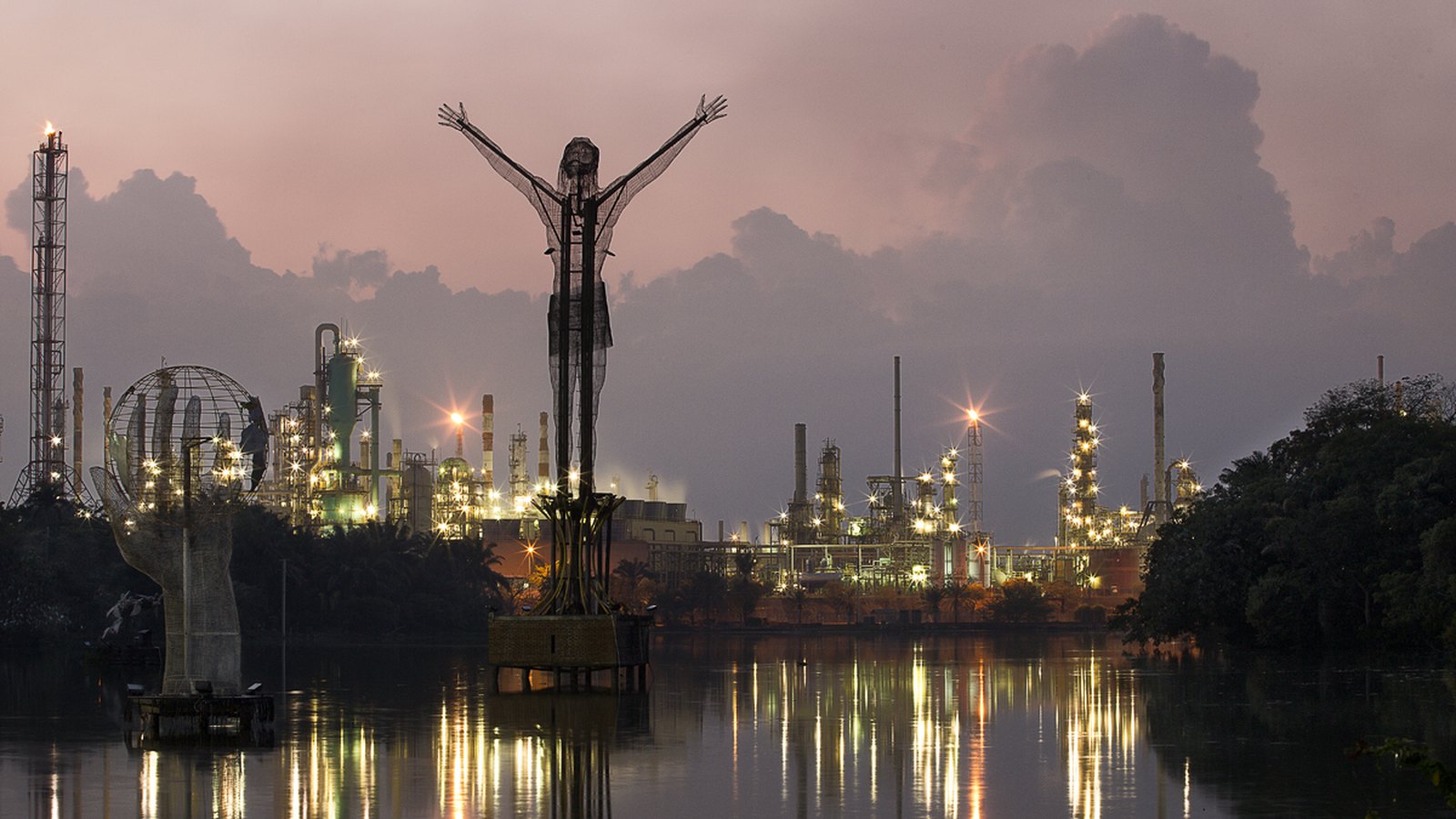
The campaign works because it keeps cutting between two scales. Wide: the plant at night with its lights doubled in the river, the pipework running out of frame, hundreds of workers assembled across open ground at first light. Tight: a welder mid-cut with sparks coming off the steel, two surveyors leaning into a theodolite, a deckhand on a red tug.
Neither register survives alone. All wide and it becomes an annual report. All tight and you lose the argument about scale entirely. Alternating them is what makes a corporate set feel like a story instead of an inventory.
The people who are not employees
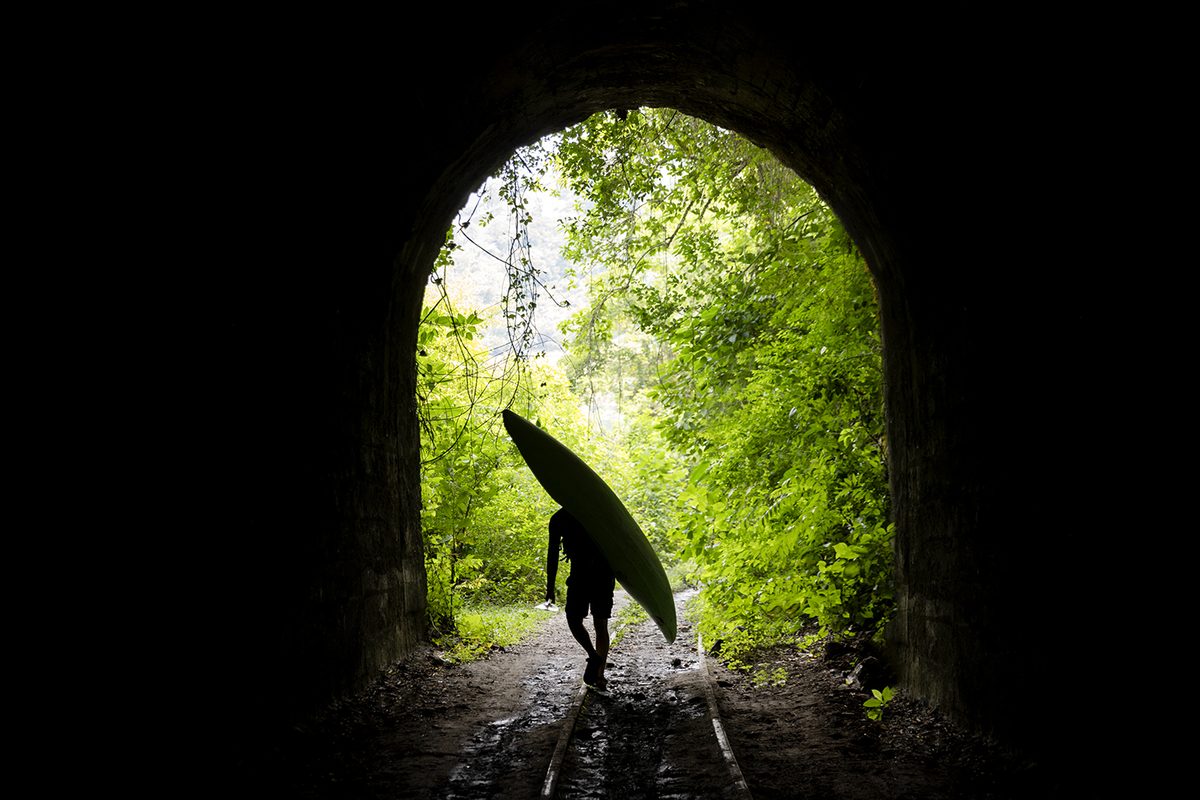
The frames I fought hardest to keep were the ones with nobody from the company in them. Two sisters photographed near the operations. Children crouched at the water with a plastic bowl. A fisherman casting a net from a canoe at sunrise. Birds coming up off a wetland.
An energy company in Colombia does not operate in empty space. It operates upstream and downstream of villages, rivers and people who were there first. A campaign that pretends otherwise is not just dishonest, it is visually poorer. Those quiet frames are what give the industrial ones their weight.
“The frames I fought hardest for were the ones with nobody from the company in them.”
Working around industrial light
Plants are lit for safety, not for photography: hard sodium and mercury sources, deep shadow, and a colour cast that fights everything. Rather than flood it away I mostly worked with it, adding just enough fill to hold a face and letting the ambient stay ugly and specific.
The dawn and dusk exteriors then do the emotional work. Horses backlit on open ground, the badlands under a big sky, the refinery at full burn against a dark river. Book the ends of the day for the frames that have to feel like something and the middle of the day for the frames that have to explain something.
Why it still matters to me
This shoot is from 2014 and it set the pattern for a lot of what came later. The habit of pairing an industrial subject with the community around it runs straight through to the work I did for Coca-Cola in Lloro, where the campaign was entirely about a town rather than a product.
It also taught me how to survive a long-form corporate commission: shoot far more variety than the deck asks for, and make sure that when the client eventually needs something they did not think of, it is already on the drive.
From the shoot
23 photographs · tap to enlargeRelated stories

Rain for Sale: Photographing the Coca-Cola Campaign in the Wettest Town on Earth

Corporate on the Move: A Business Campaign for Bancolombia