Rain for Sale: Photographing the Coca-Cola Campaign in the Wettest Town on Earth
Lloró, Chocó, Colombia · March 15, 2014 · 4 min read
Behind the lens on “Rain for Sale” in Lloró, Chocó — the rainiest inhabited place on the planet — where a Coca-Cola and Ogilvy campaign turned rainfall into clean drinking water.
Some assignments are remembered for the picture you came home with. This one I remember for the place itself. “Rain for Sale” took me to Lloró, a small town in the department of Chocó on Colombia's Pacific coast, to photograph one of the most unusual advertising campaigns I have ever been part of — a project where the product on the shelf was, quite literally, the rain falling from the sky.
It is the kind of brief that sounds like a metaphor until you arrive and realise it is simply the truth. In Lloró it rains almost every single day, and yet clean drinking water has long been scarce. That contradiction is the whole story, and my job was to photograph it honestly.
The rainiest inhabited place on Earth
Chocó is one of the most biodiverse regions on the planet and also one of the poorest in Colombia. Lloró sits at its heart, often cited among the rainiest inhabited places anywhere on Earth, with annual rainfall measured in many metres rather than millimetres. Clouds gather against the mountains and release their water over the town day after day, year after year.
And still, for all that abundance overhead, families here have struggled for reliable access to safe, potable water. The infrastructure that most of the world takes for granted simply has not reached them. Photographing in Lloró means working around the weather rather than against it: covering gear between downpours, chasing the brief windows of soft light, and accepting that everything, including you, will be wet by the end of the day.
Turning rainfall into a product
The campaign, created with Coca-Cola and the agency Ogilvy & Mather, took the town's contradiction and turned it into a solution. The community collected its own rainwater, bottled it in recycled containers, and sold the finished product. The money raised went toward building the first water-purification plant the town had ever had — clean water funded by the very rain that had always fallen for free.
Visually, that gave me a gift: fields of bottles standing in open ground, slowly filling as the sky did its work. Rows of green glass glinting under grey light. Hands sorting, labelling, carrying. I photographed the process the way I would a documentary, because that is what it was — a real piece of engineering and community effort, not a set built for a camera.
“The rain never stops in Lloró. For the first time, it was working for the people who live under it.”
From the shoot notes
Photographing dignity, not poverty
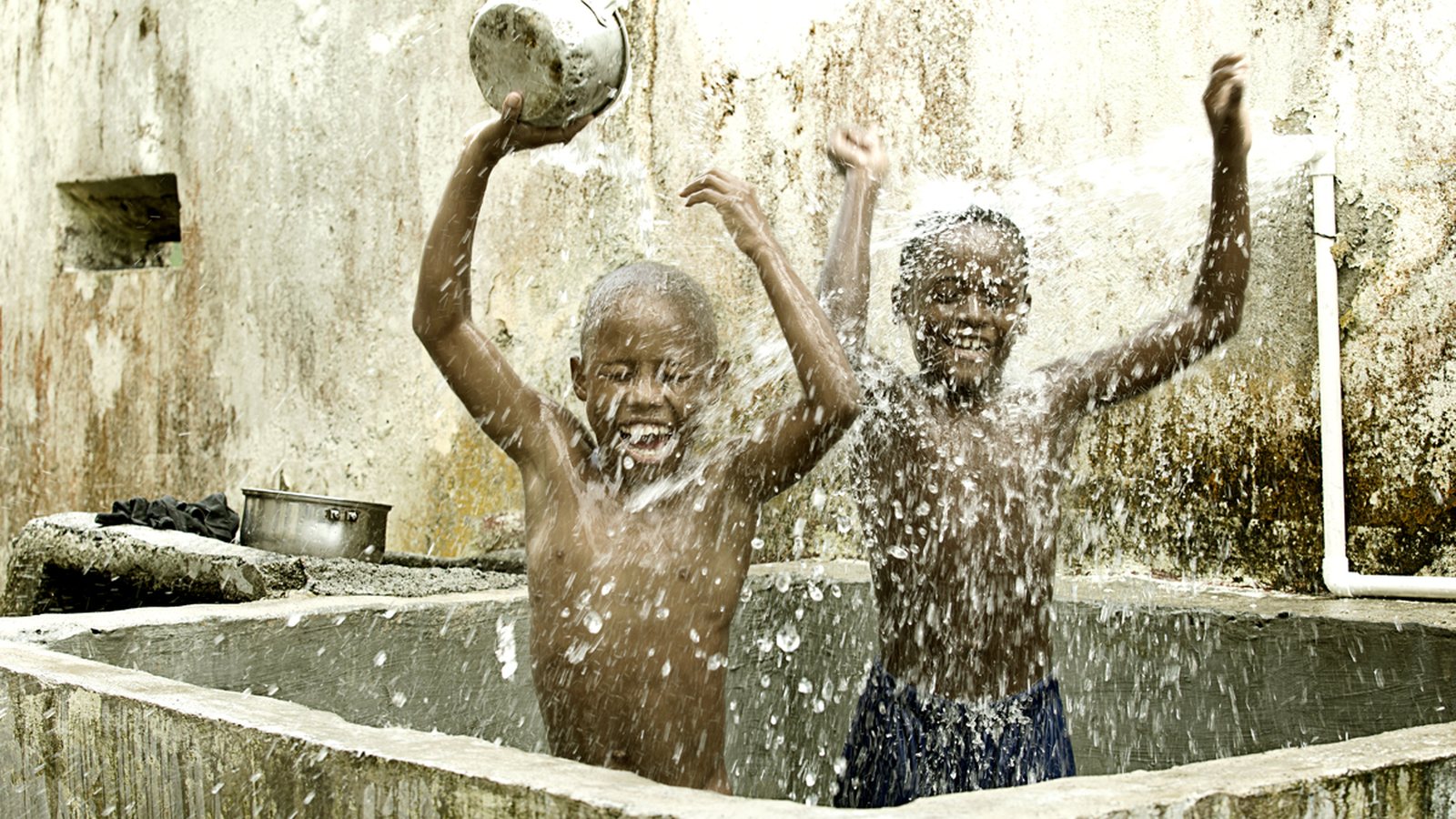
There is a trap in this kind of work, and every photographer who shoots in places like Chocó knows it. It is easy to make pictures that reduce people to their hardship — to point a lens at scarcity and call it a story. I wanted to do the opposite. The frames I care about most from Lloró are the ones full of life: kids treating a downpour as a reason to celebrate, because here it always is one. A woman holding up a bottle she helped fill, proud of it. Schoolchildren laughing with their arms around each other.
Advertising photography is sometimes dismissed as surface, but a campaign like this lives or dies on whether the people in it feel real. My approach was to spend time, to let faces relax, and to wait for the moment after the pose when someone forgets the camera is there. That half-second of honesty is the whole job. It is the same rule I follow on corporate sets — the Bancolombia campaign was built on exactly that half-second.
Why this shoot still matters
Years later, “Rain for Sale” remains one of the most meaningful projects I have photographed. Part of that is the cause — a town that gained clean water from an idea. But part of it is what the assignment taught me about the relationship between commercial work and the real world. The best advertising photography does not invent a feeling; it finds one that is already there and makes room for it inside the frame. That lesson travels with me into every commercial job since, from beer campaigns to neon-lit celebrity work.
Lloró gave me that in abundance. The rain that defines the town became the engine of its own solution, and for a few days I got to stand under it with a camera, trying to keep the lens dry long enough to catch the joy. These are some of the frames that came home with me, and they still sit close to the centre of why I do this work at all.
From the shoot
9 photographs · tap to enlargeRelated stories

Corporate on the Move: A Business Campaign for Bancolombia

Cerveza Andina: A Beer Campaign Across Colombia's Best Nights