Swimmers and Divers: Shooting the Pool from Above, Below and Underneath
Bogotá & Cali, Colombia · January 25, 2017 · 2 min read
A graphic study of divers and swimmers made in Bogotá and Cali — looking straight down onto the board, straight up from beneath the platform, and from inside the water as a body breaks the surface.
This is the set I show when someone asks what I do when nobody is paying me. It has no client, no brief and no product. It is eight pictures of people falling into water, and it taught me more about composition than any campaign I have shot.
A pool is one of the very few environments where a photographer can genuinely change the world by moving. Stand on the ten-metre platform and it is a flat field of turquoise cut by white lines. Lie down in the water and it is sky. Get under the surface and it is a dark room with a lit ceiling. Same pool, same afternoon, three completely different photographs.
Straight down
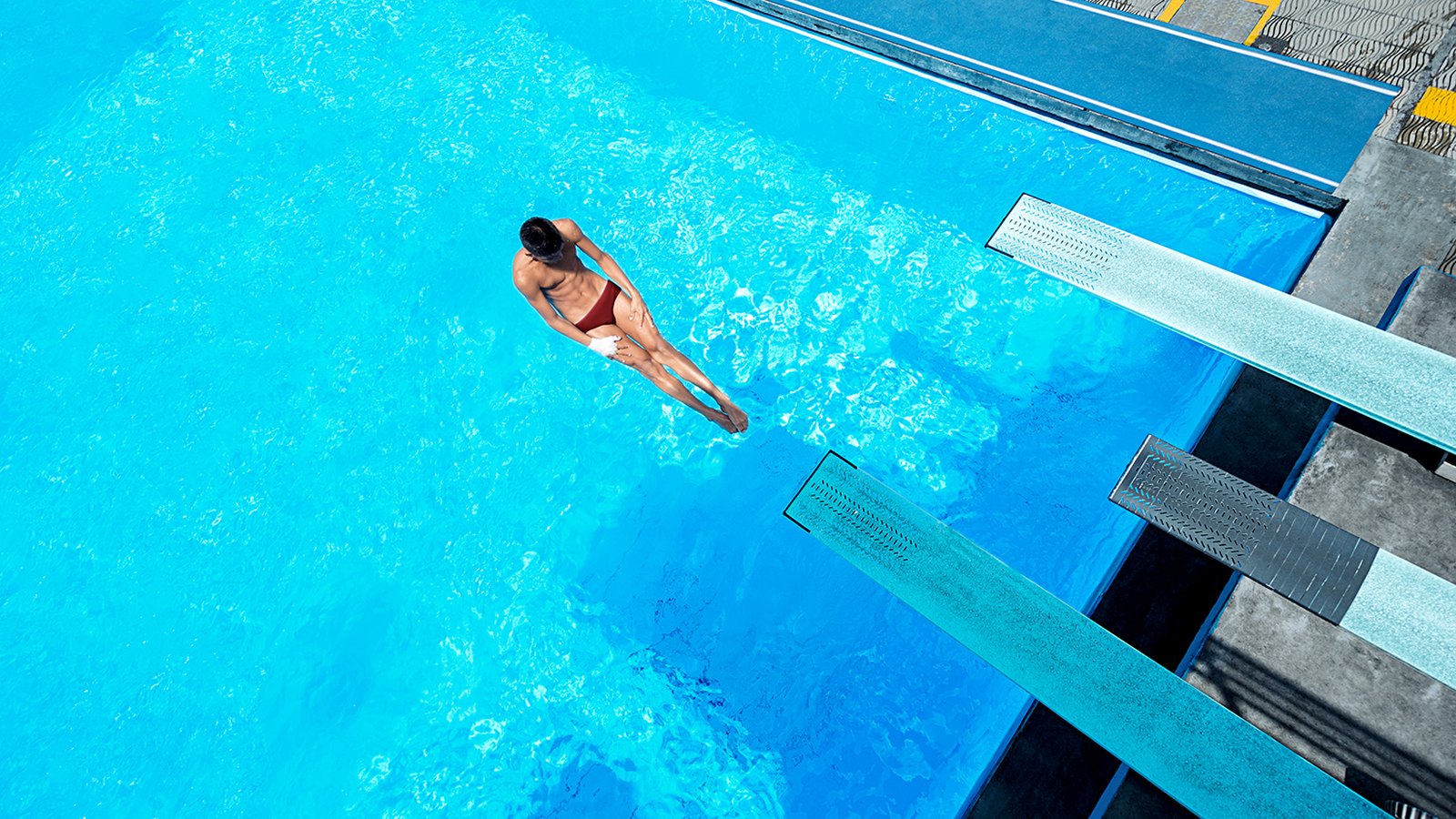
From directly overhead the pool stops being a place and becomes a canvas. The water goes to a single saturated field, the boards and gutters become hard rules across it, and the diver reduces to one small figure with a shadow. Negative space does the work — the figure only has power because of how much emptiness is around it.
The discipline here is restraint. Every instinct says to go closer and fill the frame. Everything in these frames improved when I backed off and let the person get small.
Straight up
Then I got in the water and rolled onto my back. From below, the platform reads as a solid blue wedge cutting into the corner of the sky, and the diver appears in the gap — briefly, unsupported, no reference for scale except a single cloud.
These are the frames people react to first, and they are the simplest in the set: three elements, no horizon, nothing to explain. Getting them just meant being cold and patient and shooting a great many that missed.
“The figure only has power because of how much emptiness surrounds it.”
Inside the water
The underwater frames are the hardest to control. Light behaves strangely, contrast collapses, and the moment a body enters, the whole environment fills with bubbles that will either make the picture or destroy it. The swimmer in the red cap works because the bubble trail traces the exact path of the entry — you can read the physics of it.
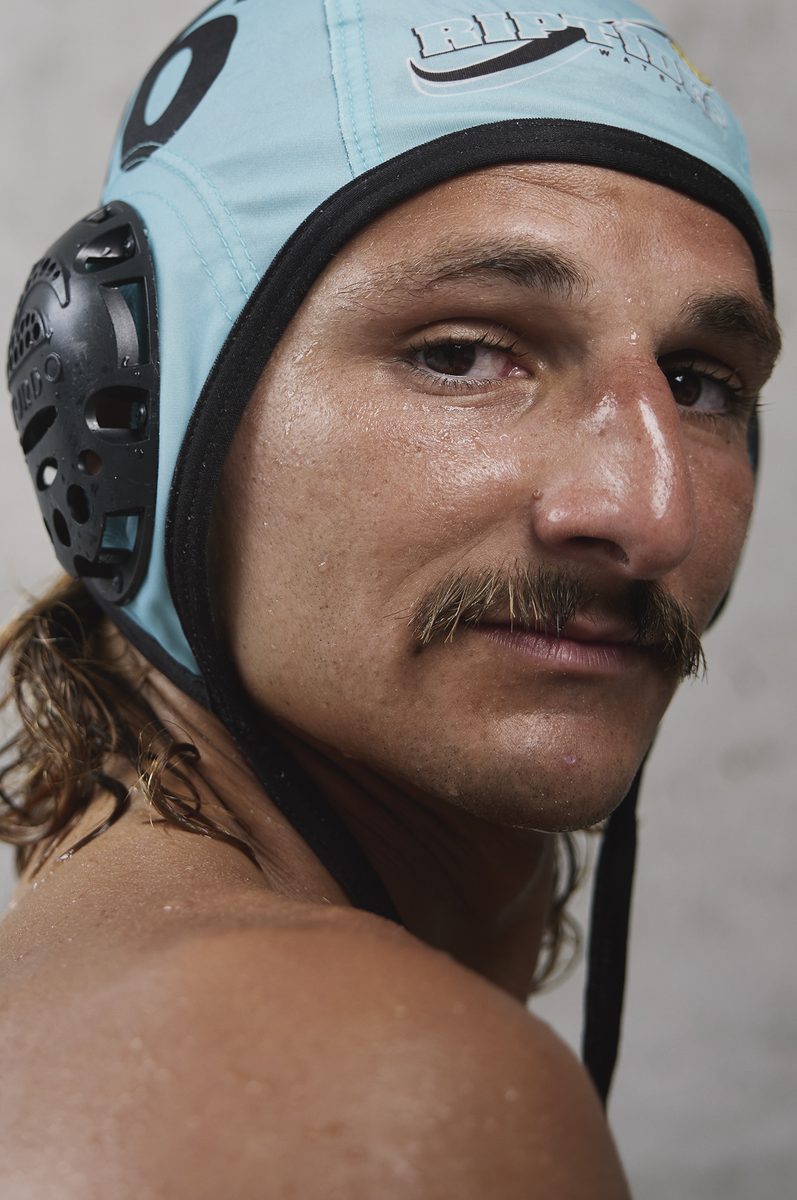
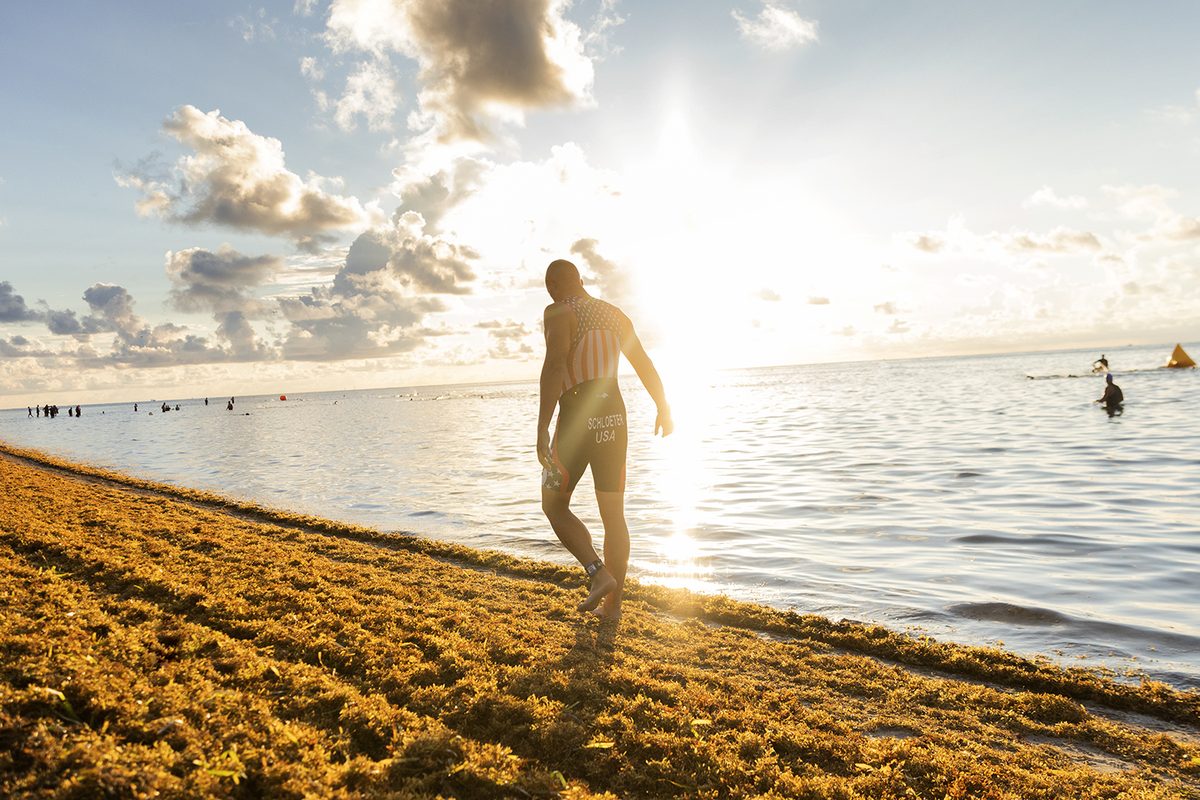
The butterfly frame is the opposite: dark water, hard surface reflections, arms spread into a shape that only exists for a fraction of a second. Both taught me things I have used commercially ever since, on the water polo series in Florida and later shooting surfers on Cocoa Beach.
Why personal work pays
I made this in January 2017 with no purpose beyond curiosity. Within two years the overhead approach had turned up in sports briefs, and the low-angle-against-sky frame became part of how I pitched the Visa Olympics BMX work.
Clients do not hire you for the work you did for them. They hire you for the work you did for yourself.