Dirt and Silks: Jockey Portraits at the Miami Track
Miami, United States · October 5, 2024 · 2 min read
Between races at a South Florida racetrack — jockeys photographed in the few minutes after they come back in, still covered in the dirt the horse in front kicked up. Silks, goggles, and faces that have just done something dangerous.
There is a window of about four minutes after a race when a jockey is the most photographable person in Florida. He has just ridden half a tonne of animal at forty miles an hour in a pack, he is coming down off it, and he has not yet cleaned his face. After that he goes inside, washes, changes silks, and becomes a professional again. I spent a morning working only in that window.
Racing photography is usually about the race — the pack coming round the turn, the finish, the photo at the wire. Those pictures are made with long lenses from a long way away and they all look like each other. The paddock and the return chute are where the people are, and people are what I photograph.
The dirt is the picture
If you ride behind the leader on a dirt track you spend the whole race being pelted. The riders wear stacked goggles and peel one layer off at a time as each fills; by the end the pair around a man's throat can be completely packed, lenses opaque with mud. One of the strongest frames in this set is just that — goggles at the neck, red silks with yellow and blue circles, no face at all.
And then the face above them: grit dried across his cheekbones and lips, expression somewhere between exhaustion and mild annoyance. Nothing in a studio produces that. You cannot direct a man into having just finished.
“You cannot direct someone into having just finished. You can only be standing there when they do.”
Silks against a flat sky
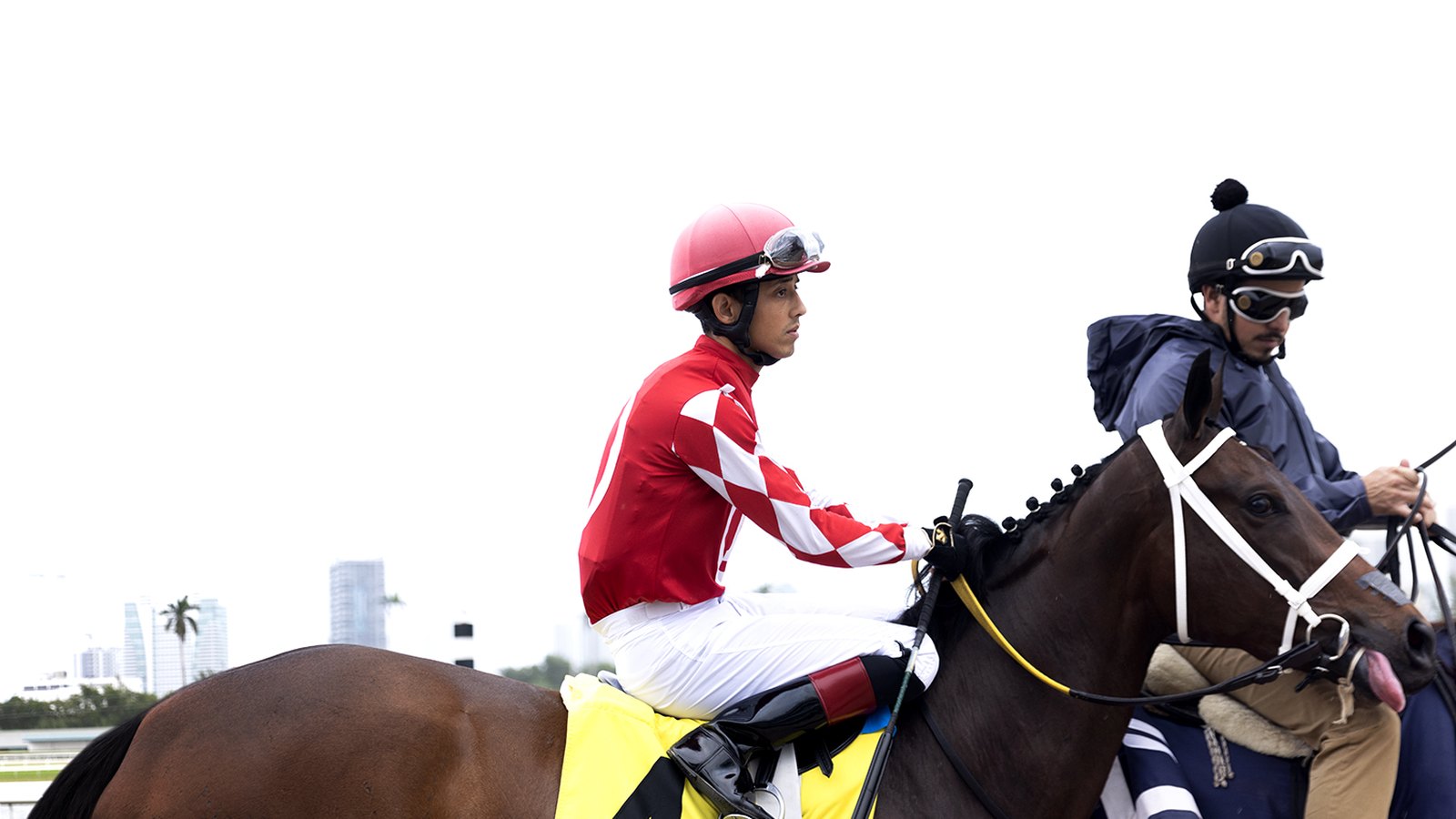
Technically this is a colour problem more than a light problem. Racing silks are deliberately loud — orange with a white star, red and white checks, polka dots, that particular racing green — and the sky over a Florida track in October is usually a flat white. So I shot wide open, kept the backgrounds empty, and let the silks do all the work. The palms and the skyline sit far enough back to place you in South Florida without competing.
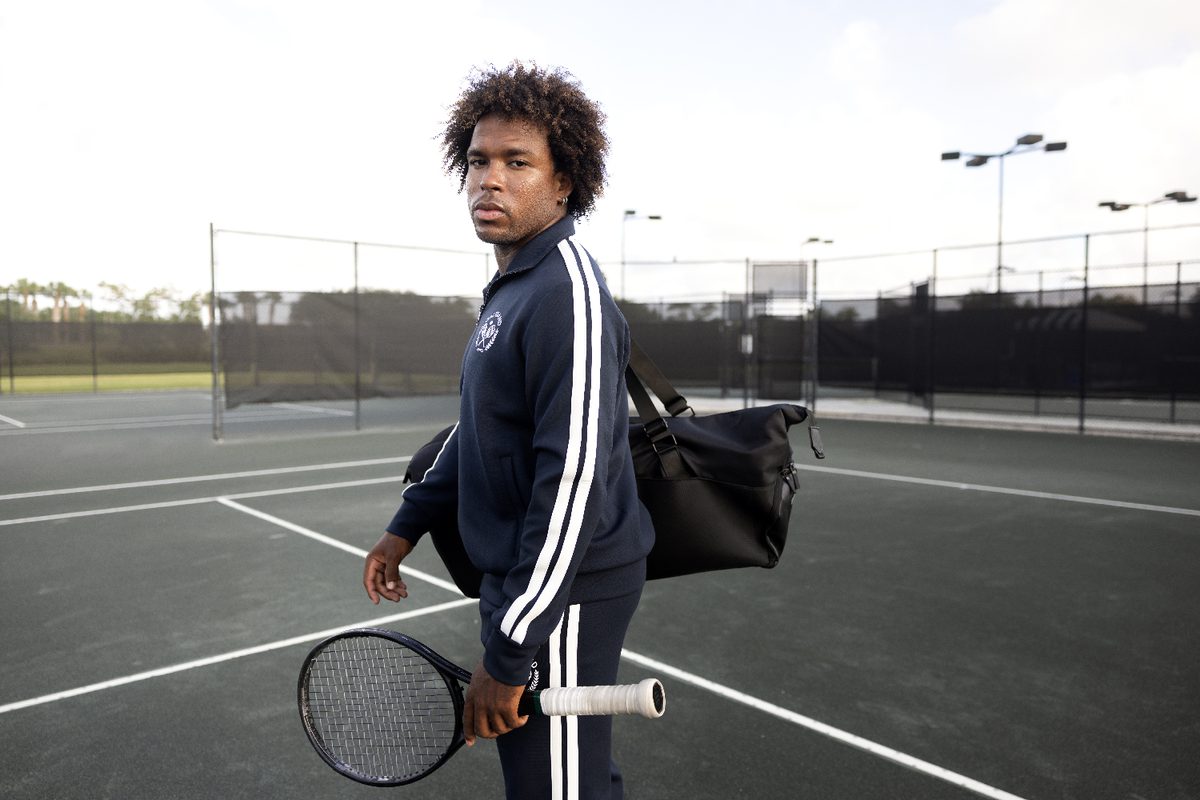
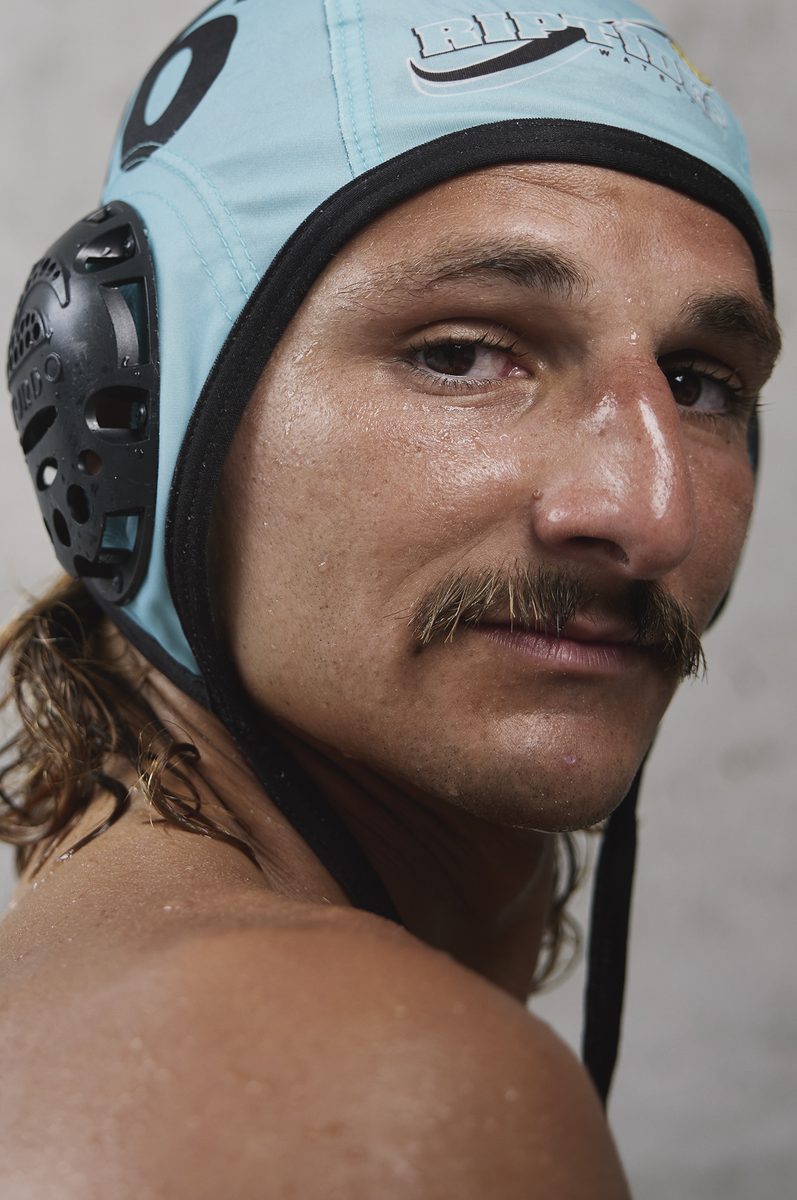
It is the same discipline I used on the tennis work for Galstand and the water polo series in Florida: find the athlete at rest, isolate them, and let the uniform carry the graphic weight.
Small men, large risk
Jockeys are the smallest professional athletes and among the most exposed. Everyone at a track knows this and nobody says it out loud. What I wanted from the portraits was not drama but ordinariness — the green-silked rider looking straight down the lens with his chinstrap still done up, entirely calm, about to go and do it again in forty minutes.
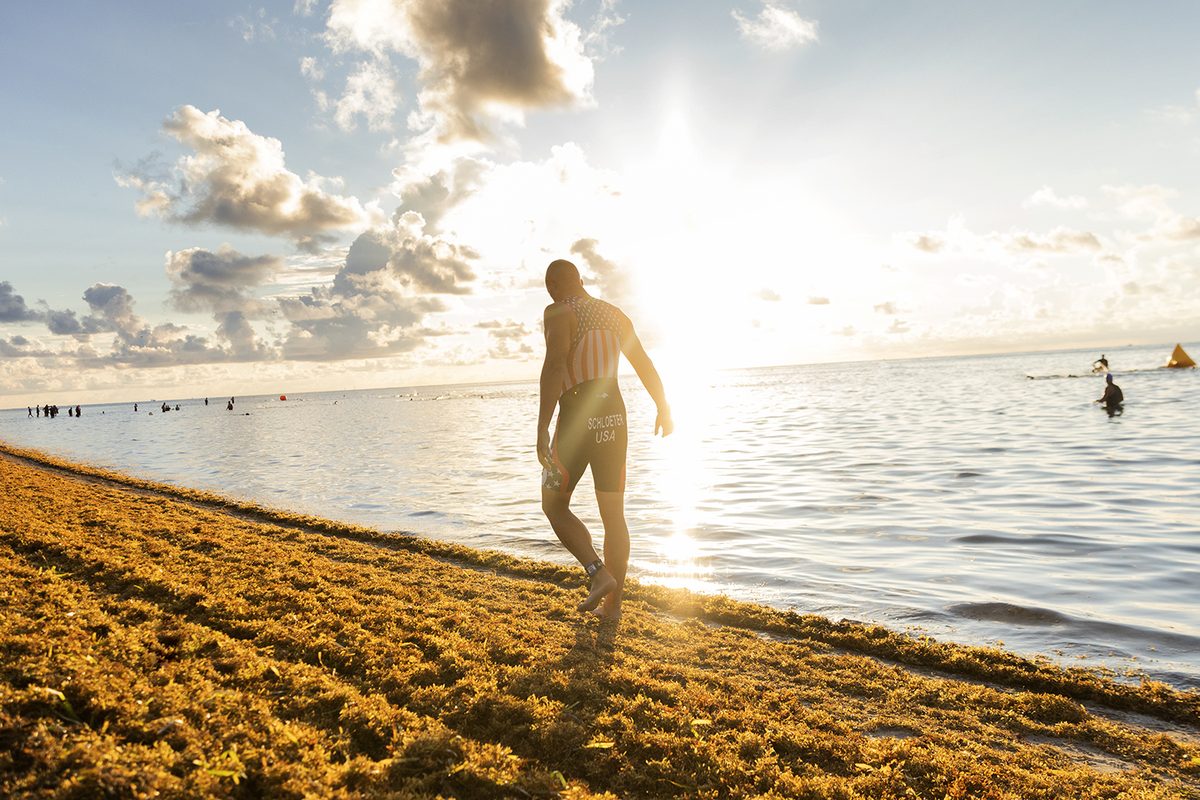
That is the register I keep coming back to in my sports work here, whether it is triathletes at dawn or firefighters in the 305. The interesting frame is almost never the peak of the action. It is the minute either side of it.